Everything Is Evolving Rapidly- The Big Trends Shaping How We Live In 2026/27
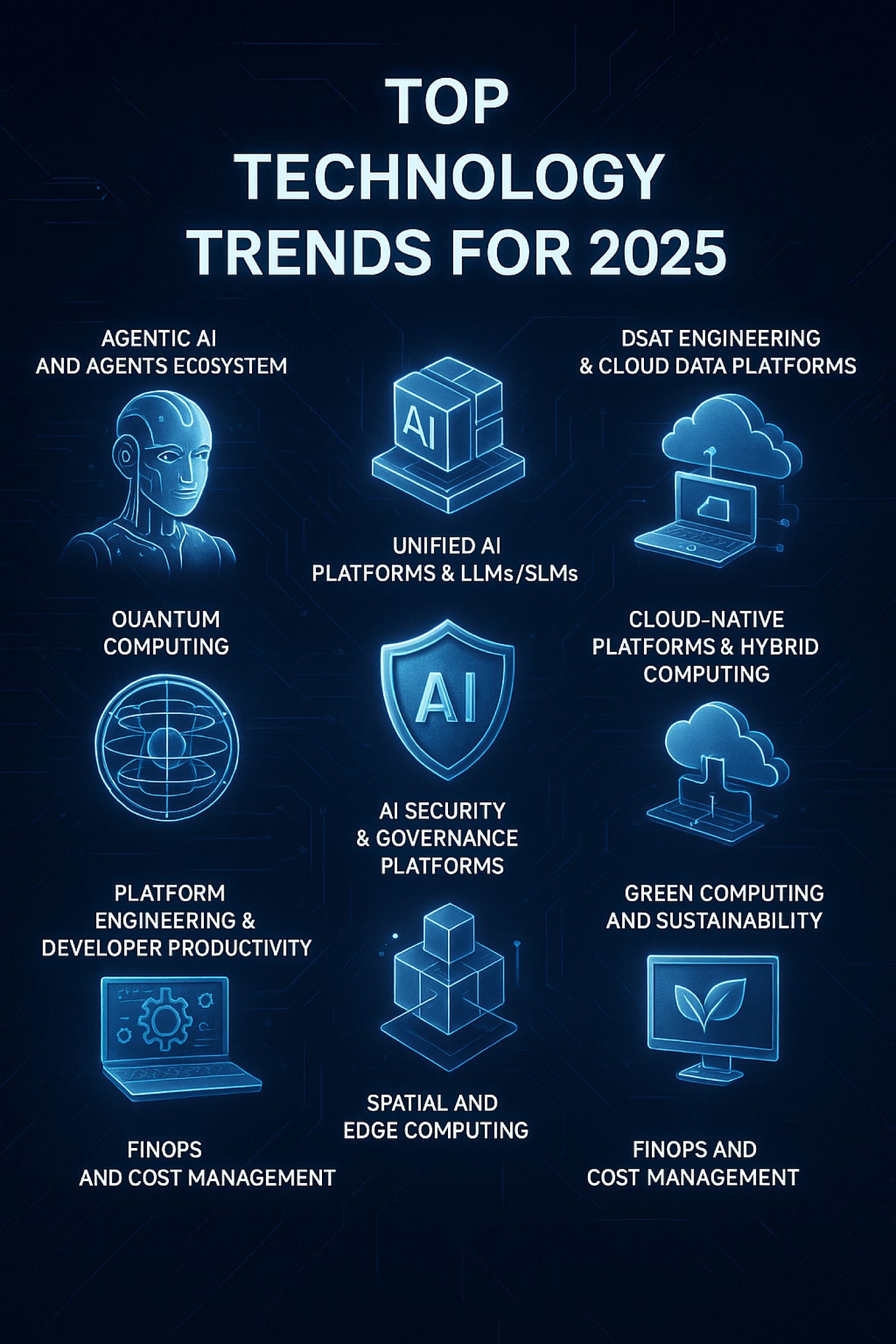
The Top 10 Tech Developments Reshaping 2026/27 And Into The FutureThe pace of digital transformation doesn't seem to be slowing down. From how companies conduct business to the way people interact with their surroundings Technology continues to alter all aspects of modern life. Some of these shifts have been in motion for years and have now reached the point of critical mass, whereas others have exploded in speed and surprised entire industries. It doesn't matter if you're working in technology or live in a society that is increasingly shaped by it being aware of where technology is headed gives you an edge. Here are the ten digital tech trends that are crucial through 2026/27 as well as beyond.
1. Artificial Intelligence is Moved From Tool to TeammateAI is moving from being just a new technology or tool to become something that is integrated. Across industries, AI technology now functions as active participants rather than passive assistants. When it comes to software development, AI creates and reviews code alongside engineers. In healthcare, it flags any diagnostic problems that a human eye may miss. In content production, marketing along with legal and other services AI does the initial writing and routine analysis in order humans can focus in higher level thinking. The shift is not about replacing, but more about altering the way human work is when the repetitive layer is taken care of automatically.
2. The Insurgence Of Agentic AI SystemsAn improvement over standard AI assistants agentsic AI refers to machines that are capable of planning and executing multi-step tasks autonomously. Instead of responding to one prompt they break down complex objectives, come up with the best course of action, employ a variety of tools as well as sources of data, and then follow with no constant input from humans. In the case of businesses, this means AI that can manage workflows or conduct research, make messages, and update systems with a minimal amount of supervision. For users who are just starting out, it involves digital assistants that actually get things done rather than simply answering questions.
3. Quantum Computing Enters Practical TerritoryQuantum computing has spent years living in the realm of potential theoretical possibilities. It is now changing. While universal quantum computers remain in development advanced systems are beginning to show tangible advantages in the areas of drug discovery, materials sciences, logistics optimisation and financial modelling. Large technology firms and national governments are accelerating investment into quantum technology, while the race to secure a substantial commercial advantage is growing. Businesses that are paying attention now are better off to benefit when the technology matures.
4. Spatial Computing, as well as Mixed Reality Expand Their FootprintIn the wake of the commercial launch of large-scale mixed reality headsets spatial computing is seeing use cases well beyond gaming and entertainment. Architecture firms are using it to perform deep review of design. Surgeons practice complicated procedures in virtual environments. Remote teams meet in shared 3D spaces. As technology becomes lighter and less expensive, spatial computing is destined to become an essential element of how digital information is processed or navigated on both in professional and everyday scenarios.
5. Edge Computing Brings Processing Closer to the SourceCloud computing has transformed what was feasible by centralizedizing processing power. Edge computing is expanding its reach, and for great reason. by processing data near where it was generated, whether on the floor of a factory, on a ward in a hospital or inside the vehicle's connected system, edge computing reduces delay, improves reliability and decreases the bandwidth requirements of constant cloud-based communication. In applications where real-time responsive is not a requirement, from autonomous vehicles, automated manufacturing to the smart infrastructure of cities edge computing has become a crucial component.
6. The Cybersecurity field develops into a constant DisciplineThe threat landscape is growing too quickly and too complex for the old model of periodic audits and patching reactively. In 2026/27, organizations that are serious will treat cybersecurity as a continuous overall discipline rather than an IT department's issue. Zero-trust infrastructure, based on the assumption that all users and systems are trustworthy by default, is becoming the norm. AI-driven systems monitor networks in real-time, identifying any anomalies prior to them becoming violations. Humans are one of the most vulnerable vulnerabilities, that is why security training and culture crucial as any technical solution.
7. Hyperautomation Joins The Dots Between SystemsHyperautomation utilizes a combination of AI and machine learning and robotic process automation to recognize and automate entire workflows rather as isolated tasks. Instead of focusing on simple automation, it examines the linkage between the systems that used to require human co-ordination and removes that resistance completely. Industries that range from banking and insurance through supply chain management as well as public services are discovering how hyperautomation not only make costs less expensive, but it also transforms what a company is capable to do in terms of speed.
8. Green Tech And Sustainable Digital InfrastructureThe environmental impact for digital infrastructure is undergoing greater focus. Data centres use huge amounts of electricity. Furthermore, the increasing number of AI training workloads has pushed the use of electricity up. To counter this, the industry spends money on more energy-efficient devices, renewable power facilities, coolant systems that are liquid, and more effective methods to manage workloads. For businesses with ESG commitments, the carbon footprint of technologies is now a problem that cannot be absorbed in the background.
9. The Democratisation Of Software DevelopmentAI-powered platforms for low-code and zero-code have put software development within users with no training in programming. Natural interfaces to languages and visual development environments allow domain experts create functional apps as well as automate complex procedures or integrate data systems in a way without dependence on external developers. The pool of people who are able to develop digital solutions is increasing rapidly, and the impacts on agility of business and innovation are significant.
10. Digital Identity And Data Sovereignty The Future of Data Sovereignty and Digital IdentityAs the world of technology grows and the internet becomes more prevalent, the question of who owns personal data and how identities can be copyright are becoming central rather than a matter of a few minutes. Identity frameworks with decentralisation, privacy-preserving technology, and more robust rights for data portability are getting more attention. In both the public and private sectors, they are moving towards solutions that allow individuals to have more real control over their digital identities, as well as more transparency into how their information is used. The course is clearly defined, even if the path there remains unclear.
The trends discussed above are not an isolated phenomenon. The trends above feed back into and accelerate one another making a digital world in rapid change at any previous point in time. Being aware is no longer only for technologists. In a world this thoroughly affected by digital technologies, this is becoming more pertinent to every person. For further context, browse a few of the best landsortstidningen.se/ for more info.
 The 10 Digital Social Developments Driving How We Connect In The Years Ahead
Social media has become integrated into the daily lives of people that distinguishing its impact from culture at a larger scale is becoming more difficult. It has an impact on how people form opinions, establish identities while they consume entertainment, follow updates, develop relationships and are a part of public life. The platforms themselves are advancing rapidly, driven by regulation, competition, and the constant demand to hold and capture our attention. What's happening in 2026/27 is a digital landscape that is more fragmented increasingly AI-dominated, and consequential than at any previous moment. Here are ten major social media trends that are affecting culture going into 2026/27.
1. AI-Generated Content Floods Every PlatformThe amount of AI-generated material across the social networks has reached the point of changing the current information landscape. Images, videos and writing posts, and complete accounts generating content that is synthetic at rapid speed have become a standard feature of all major platforms. The implications range from the generally benign, AI-powered authors creating more content and more effectively but also the extremely destructive, synthetic misinformation, fabricated identities, and manufactured consensus at a level that human moderation cannot keep pace with. The ability to distinguish human-generated from AI-generated content is growing to be a technical problem and an important cultural skill.
2. Short-Form Video Remains Dominant But EvolvesShort-form video emerged as one of the leading formats for content in the present time, which will continue to be the dominant format in 2026/27. What has changed is the level of sophistication of the content as well as those watching it. Creators are experimenting with more sophisticated formats that are within the constraints of short-form and people are showing growing desire for quality content that uses the format intelligently rather than just optimizing the format for the initial three seconds of their attention. Platforms are themselves experimenting with larger formats and more interactions as they strive at extending beyond the scroll to create the kind of constant time on the platform that is translating into economic value.
3. The Creator Economy Grows And It StratifiesThe creation economy has grown into a substantial economic sector, but the distribution of its profits is becoming increasingly disproportional. A tiny fraction of creators at the top of the list earn considerable income, while a vast middle of the market struggles to convert attention into sustainable revenue. Platform algorithmic shifts, increasing popularity of content, and the struggle to stand out in an environment in which AI could replicate content on the surface at zero marginal cost are all adding pressure on mid-tier creators. The most resilient creative businesses in 2026/27 revolve around genuine community, unique perspective, as well as direct monetisation models that limit dependence on platforms' algorithms.
4. Decentralised And Alternative Platforms Gain GroundUnhappy with major centralised platforms, driven by fears about algorithmic manipulation information privacy, data security, content moderating inconsistency, and concentration of power within a limited group of technology companies is fuelling growth in alternative social platforms that are decentralised. Federated social networks based on the open protocol, specialised communities serving specific interest groups, and models that are based on subscriber support, which align platform incentives with user value rather than demands from advertisers are all gaining attention from audiences. The most popular platforms enjoy enormous scaling advantages, yet the ecosystem around them is growing to be more diverse.
5. Social Commerce Develops into a Main Shopping ChannelThe integration of online commerce directly into feeds on social media or live streams as well as creator content has produced an alteration in consumer behavior that has been particularly noticeable in young people. Social commerce, where users can discover and purchasing items without leaving an online platform, is growing rapidly across every social media channel. Live shopping experiences, a trend that was pioneered in Asia and now expanding worldwide mix retail and entertainment with a focus on conversion rates and high engagement. For brands, the influencer relationship has evolved from awareness marketing into an direct sales channel that comes with quantifiable revenue attribution.
6. Raw Content and Authenticity Opposition to PolishAn alternative to years of aspirationally produced, highly produced curating social media content is increasing the demand for authenticity genuineness, spontaneity, and imperfection. Creators who share unedited moments in which they express genuine uncertainty and live lives that are natural and not aspirationally impossible are finding engaged audiences that polished content has a hard time to connect with. This is not a wholesale rejection of quality, but a recalibration of what quality is in the current context of authenticity itself is becoming a type of competitive advantage. The fact that authenticity in its raw form can be as meticulously constructed as any other form of content is not lost on the more self-aware corners of the internet.
7. Mental Health And Platform Design Be Prepared for Greater ScrutinyThe relationship between use of social media with mental well-being, especially among adolescents continues to draw significant research, attention from regulators and public discussion. Age verification requirements, screen time tools with transparency obligations for algorithmic algorithms, and limitations on certain content recommendations are all in the process of being implemented or being considered in a range of major jurisdictions. The design decisions of platforms that exploit psychological weaknesses to increase interaction are now under scrutiny, and is beginning to produce genuine adjustments to the way in which products are built and run. The gap between what platforms have learned about the consequences of their design choices as well as what they publish publicly remains a central point of contention.
8. Communities and Interest-Based Spaces Gain In ImportanceIn the same way that the public format of social media where everyone posts to my explanation everyone about everything, has been exposed for its weaknesses in terms of pollution, polarisation, and loudness, smaller more specific communities are growing in popularity. In particular, discord and other subreddits, Substack communities or private chats and niche forums geared around specific interests or identities are where lots of people are finding the social interaction and connection they've come to expect from general-purpose platforms. The change is in line with a broad awareness that the size that powers platforms also creates difficult environments for genuine communities to build.
9. Political And News Content Faces Platform RetreatSome major social media platforms have taken deliberate actions to minimize the significance of political and news material in their algorithms for recommendations considering the harm and impact it has on its contribution to user experience. Its implications on public discourse as well as journalism and political communications are substantial and debated. For news organizations who built distribution strategies around Social Referral Traffic, the recrudescence poses a serious threat. Political actors, who are used to using social platforms as direct communications channels, it is demanding a revision of digital strategy. The bigger question of what function social platforms are supposed to play in the democratic information ecosystems is very unanswered.
10. Digital Identity and Online Reputation Become Long-Term AssetsThe accumulation of an online presence over a period of years or even decades can be a challenge for individuals to have to manage with greater precision. Digital identity, the quantity of information that a person has posted, shared, built and shared on various platforms, is having real-world implications for relationships, careers and opportunities which did not exist before social media became a thing of the past. The management of online reputation is a matter of deciding what to share with whom, what to curate and what to erase, and how to build a consistent as well as credible digital presence as time passes, is becoming an essential life skill rather as a problem only for professionals or those in media-facing roles. The enduring nature and the searchability of online content implies that decisions made casually in one context may be repeated in another, with ramifications that are hard to anticipate.
The world of social media in 2026/27 is increasingly powerful, more contentious and more significant than at any point in its relatively short history. These trends are indicative of the current state of affairs, by which rules on engagement will be renegotiated by platforms, regulators, users and creators at the same time. The process of navigating it, whether either a person, a company or as a whole, requires more critical sophistication than the first utopian conceptions of social media that were necessary. For more info, browse the top pacificwatch.nz/ and get expert analysis.